
















How to Completely Black Out a Window: Complete Guide
Do you dream of total darkness to improve the quality of your sleep, create the perfect ambiance for your home cinema, or simply shield yourself from prying eyes? Total window blackout is much more than just a black curtain. It is a technical and aesthetic solution that radically transforms your relationship with light and privacy. Whether you are a night worker, an amateur photographer, a movie enthusiast, or simply seeking a peaceful cocoon, knowing how to completely black out a window is essential. This article guides you through all the methods, from the most classic to the most innovative, incorporating the latest trends in decoration and home automation, so you can find the solution perfectly suited to your needs and your interior.
Why seek absolute darkness? The unsuspected benefits
The desire for a room plunged into complete darkness often goes beyond simple comfort. The reasons are numerous and affect our daily well-being. The first is obviously sleep quality. Our circadian rhythm is regulated by light. Even a faint glow, like that from a streetlamp or the early dawn, can disrupt the production of melatonin, the sleep hormone. Total blackout is therefore a valuable ally for light-sensitive sleepers, parents of young children, or people working shift hours.
Beyond sleep, darkness is crucial for leisure activities. A home cinema worthy of the name requires perfect darkness to optimize screen contrast and immersion. Similarly, video game enthusiasts or photographers who use their living room as an occasional studio will appreciate being able to control every ray of light. Finally, the aspect of privacy and security is paramount. Blacking out a window, especially on the ground floor or facing neighbors, offers incomparable peace of mind.
The thermal blackout curtain: the classic and effective textile solution
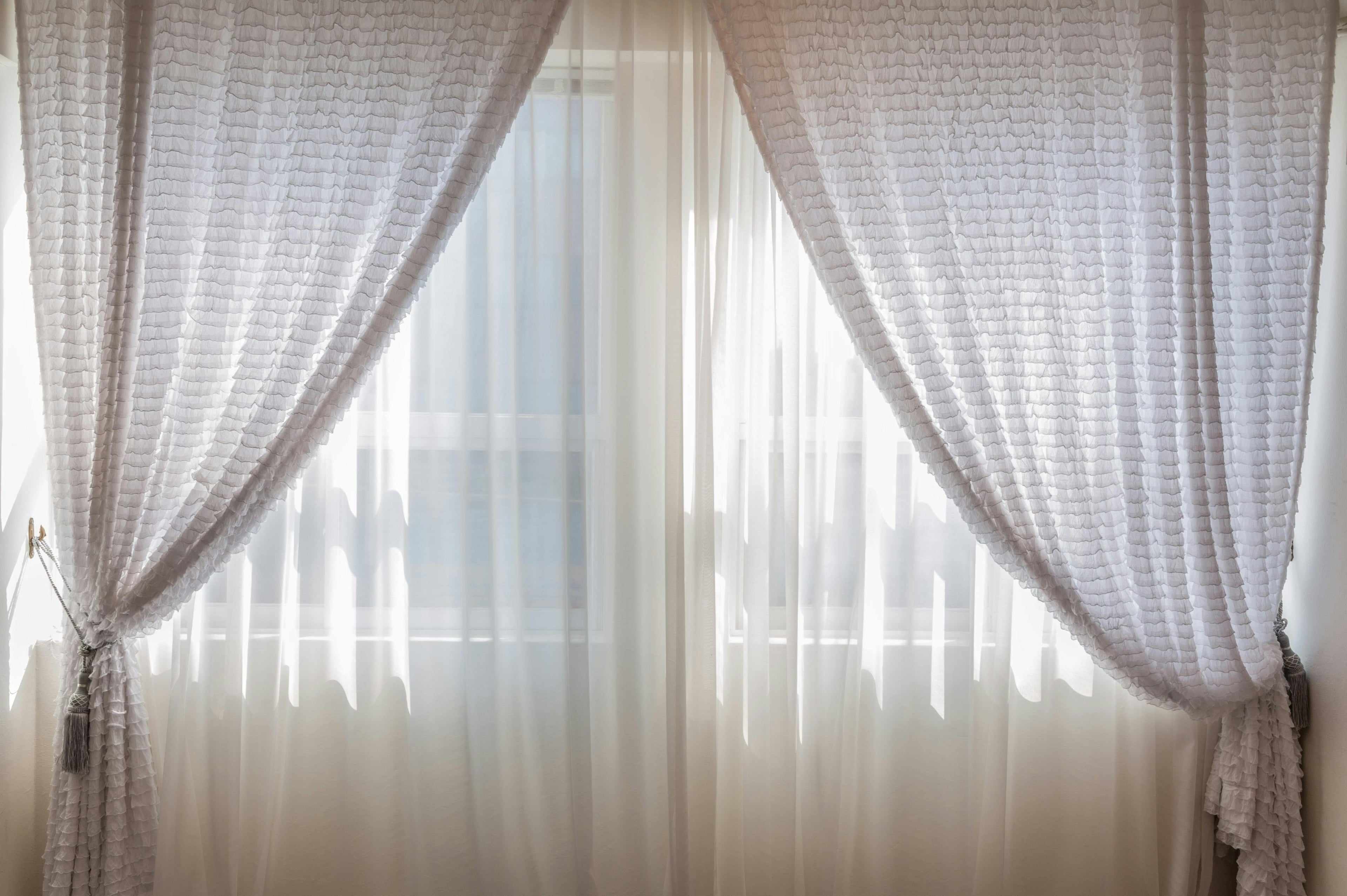
The curtain remains the most common and versatile solution for blacking out a window. But not all curtains are created equal. For total darkness, you need to turn to so-called "blackout" or "opaque" curtains. These technical fabrics are composed of several layers, often a decorative face, a dense foam layer, and an opaque backing that blocks up to 99.9% of light.
Effectiveness also depends on installation. A curtain must be wide enough (at least 1.5 to 2 times the width of the window) and fall generously over the sides and bottom to prevent light leaks at the edges. Ideally, install it on a ceiling-mounted or wall-mounted track or rod, and have it touch the floor. Current trends favor fabrics with noble textures like velvet, thick linen, or quilted synthetic blends, which also provide excellent thermal and acoustic insulation.
Choosing and installing your blackout curtain
For optimal results, follow these tips. Measure precisely: plan for a generous width and a length that skims the floor or even creates a slight "pooling" to block any light from the bottom. Opt for a sliding track system with gliding hooks, which is more airtight than a ring rod. Attach weights to the bottom hem to keep the curtain hanging straight and flat against the wall. Finally, for wide windows, prefer two panels that meet in the center with significant overlap.
Roller blinds and shutters: technical precision for darkness
If the curtain is a flexible solution, the blind or roller shutter offers a more structured and often more airtight approach. Blackout blinds, whether horizontal (Venetian) or vertical, allow precise light control. But for total blackout, "Total Blackout" or "Night Complete" roller blinds are unbeatable.
These are cassette blinds, where the technical fabric rolls up into a sealed housing fixed above the window. Their great advantage is their perfect fit on the sides thanks to side guides in which the edges of the blind slide. No light can filter through the sides. Combined with an opaque fabric and a quality bottom bar system, the result is near-hermetic darkness. This is the preferred solution for modern bedrooms and screening rooms.
Roller blind or roller shutter?
The roller shutter, often made of PVC or aluminum, is even more robust. Installed in the window recess or externally (on the facade), it constitutes a total physical barrier to light, while offering enhanced security and insulation. Electric models, controllable by remote control or via a smartphone app, represent the current trend in home automation and comfort.
The custom solution: window covers and removable panels
Sometimes, standard solutions are not enough, especially for unusually shaped windows (roof, bay window, skylight) or when seeking absolute perfection. This is where custom solutions come in. Window covers are rigid panels (made of wood, MDF covered with fabric, dense acoustic foam) that fit into or are attached by magnets or Velcro to the window frame.
Their effectiveness is maximum because they perfectly conform to the shape of the opening. They are increasingly seen in recording studios or high-end home cinemas. A more accessible and DIY version involves cutting a panel of extruded polystyrene covered with aluminum foil or black fabric and wedging it into the recess. It's economical, ultra-effective, but not very aesthetic during the day.
Doubling up solutions for formidable effectiveness
For the most demanding, a single layer is sometimes not enough. The technique of layering is then the key to total blackout and versatility. The idea is to combine two systems that work in synergy. The most common and effective combination is a roller shutter or blackout blind, coupled with a thick blackout curtain.
The first (blind/shutter) ensures side sealing and a first opaque barrier. The second (curtain) adds an extra layer, eliminates residual micro-leaks, and brings the decorative aspect and acoustic insulation. This layering also allows for light gradation: you can use only the curtain for soft lighting, or close everything for pitch-black night. Also consider adding adhesive blackout strips to the edges of the windows if a thin sliver of light persists.
Don't neglect the details: critical points to block
Obsession with detail makes all the difference between good blackout and perfect darkness. Even the best blind can be betrayed by marginal light leaks. The critical points are the window perimeters. Check and treat these areas: the space between the blind/curtain track and the wall (a valance may be necessary), the gaps on the sides of the blinds (adjustable via side guides), and especially, the bottom part of the window.
This is often where daylight sneaks in. Ensure your curtain touches the floor properly or that your blind has a bottom bar that perfectly hugs the windowsill. For double-hung windows, the seals between the two sashes can also let light through; adhesive brush seals can solve the problem.
Current trends: smart blackout and sustainable materials
The field of blackout is not immune to the revolution of the connected home and eco-responsibility. Home automation is a major trend. Electric blinds and shutters can now be programmed to close automatically at sunset, or integrated into a "Cinema" scene that also dims the lights and starts the sound system. Light sensors can control everything autonomously.
On the materials side, demand is growing for sustainable products. Blackout fabrics made from recycled fibers, FSC-certified wood or recycled aluminum blinds, and low-VOC paints for custom covers are on the rise. Aesthetics are trending towards dark, deep colors (midnight blue, forest green, anthracite) that contribute to blackout while creating cozy and sophisticated atmospheres, far from simple white or impersonal black.
Practical cases: solutions adapted to each window type
Each window presents its challenges. For a large bay window, a custom extra-wide roller blind with side guides is often the most elegant and technical solution. For a roof window (Velux), manufacturers offer specific blinds or shutters that perfectly adapt to the hinge and tilt, often operated by a telescopic rod.
French doors require a system that does not hinder access. Double blackout curtains sliding on a track or roller blinds placed on the glazed part (above the handle) are options. For small bathroom or toilet windows, a micro-perforated opaque adhesive film (which allows a view from inside to outside) can be a quick alternative, although it does not provide total darkness at night when the interior is lit.
FAQ: Your questions about total window blackout
What is the most effective solution for a bedroom?
For a bedroom, the combination of a roller shutter (if the joinery allows it) or a blackout blind with side guides, and a velvet or thick blackout linen curtain is the winning combination. It combines technical performance, sound insulation, and decorative warmth. Opt for soothing curtain shades.
Can total darkness be achieved with adhesive solutions or films?
Opaque adhesive films block the view and a large portion of light, but rarely 100%. They can let through a diffuse glow, especially in direct sunlight. They are excellent for daytime privacy but often insufficient for deep sleep or a home cinema. For true darkness, prefer a thick, non-adhesive system.
How to temporarily and economically black out a window?
Several DIY solutions exist. The simplest: a blackout curtain bought at a hardware store, fixed with a tension rod (no drilling). You can also use foam board covered with black fabric, wedged into the recess. Or, staple blackout fabric onto a thin wooden panel. It's effective, but the aesthetics are often basic.
Does total blackout make the room stuffy?
Not necessarily. It is crucial to air the room well during the day. Choose natural, breathable materials (linen, dense cotton) for curtains. For bedrooms, plan a time during the day to open the windows wide and let in natural light, which is vital for morale and the biological rhythm.
Are blackout blinds compatible with home automation?
Absolutely. It is even a strong trend. Most major manufacturers offer integrated motors for blinds and shutters, controllable via Wi-Fi or dedicated protocols (Zigbee, Z-Wave). You can thus control them by voice (with an assistant like Alexa or Google Home), integrate them into scenarios, or program them on schedules.
Conclusion: Create your custom sanctuary of darkness
Totally blacking out a window is a project that combines technical pragmatism and decorative sensitivity. Whether you opt for the sophistication of a motorized blind, the warmth of a blackout velvet curtain, or the radical effectiveness of a custom cover, the goal is to regain absolute control of light in your home. This approach transforms a simple room into a sanctuary dedicated to rest, entertainment, or concentration. Remember that small light leaks can compromise the entire project; be meticulous about installation details. By investing in a suitable solution, you gain comfort, privacy, and mastery of your environment. To discover more inspiration and technical solutions to personalize every corner of your home, explore without delay the numerous resources available on ombreinterieur.fr. Discover the product Unique Winter Travel Posters Elegant Wall Decoration For A Warm Ambiance to finalize your decor. Check out our article how to create a cocooning ambiance by combining curtains and bedding to go further. Get inspired on our decoration website for your upcoming projects.
