














How to hang curtains?
Hanging curtains is far more than a matter of rods and fabric; it is the art of shaping light and privacy within your home. A poorly executed installation can disrupt a room’s harmony, whereas thoughtful placement enhances every volume. You will learn to select the right system, take precise measurements, and fix your rod with care for a result that is both beautiful and practical. Let this guide lead you toward an elegant transformation of your space, where soft folds filter daylight and create a cocoon of quiet intimacy.
Hang Your Curtains Perfectly
Hanging curtains is a fundamental step in interior decoration. Not only do they add an aesthetic touch to a room, but they also play a crucial role in managing light and maintaining privacy. Understanding how to hang curtains correctly is essential to maximize their effectiveness and beauty. In this section, we will explore the importance of properly hanging your curtains to transform your home's space.

Taking Measurements Correctly
Measuring the Window Width
Before purchasing a rod or curtains, precisely measure the width of your window. Use a tape measure to measure the available space, taking into account the rod brackets that will be fixed to the wall or ceiling. This step is crucial to ensure the rod fits perfectly and that the curtains will fully cover the window.
Determining the Ideal Curtain Length
The length of the curtains depends on the desired effect: some prefer their curtains to lightly touch the floor, while others opt for a shorter version. For a traditional look, add about 2 to 3 centimeters from the floor to prevent the fabric from dragging. If you're aiming for a more modern look, curtains can even be shorter, falling just below the window sill. This complementary article will give you lots of information: How to fix a curtain rod on a wardrobe?
Tips for an Aesthetic Result
Using a level to mark the drilling points on the walls will ensure your rod is perfectly horizontal. For curtains with grommets or rings, make sure the bracket height allows the curtains to fall gracefully. When drilling, use wall plugs suitable for the type of wall (plaster, brick, etc.) to securely fix the brackets. Finally, choose a fabric that complements the room's style while fulfilling its practical functions, whether it's filtering light, offering privacy, or blocking drafts.

Choosing the Mounting System
Selecting the mounting system is a crucial step in the curtain hanging process. The choice depends not only on the type of curtain but also on the functional and aesthetic aspect you want to give your interior.
Curtain Rods: Choice and Installation
The curtain rod is the most common mounting system and comes in several versions to suit all decoration styles. When choosing your rod, take into account the weight of your curtains to select the appropriate diameter. The height at which you fix the rod above the window will influence the perceived height of the room. For installation, measure and mark with a pencil the location of the rod brackets, ensuring they are level and at the correct distance from the ceiling and the sides of the window. Check out our collection of rods as soon as possible!
Curtain Tracks: Advantages and Setup
Curtain tracks offer a more discreet solution and are ideal for pleated curtains or sheers. They allow for smooth opening and closing and can be fixed to the ceiling for a clean look. The advantage of tracks is also their ability to curve, offering a solution for corner or rounded windows. During installation, ensure the track is straight and fix it firmly to the ceiling or wall with suitable wall plugs and screws.
Other Mounting Systems: Rings, Clips, Grommets
For an original touch, explore other mounting systems such as rings, clips, or grommets. Rings slide onto the rod and are perfectly suited for light or medium-weight fabrics. Clips offer a more casual look and are easy to install. Grommets, on the other hand, are integrated directly into the curtain fabric and allow for easy sliding on the rod, ideal for a modern interior. This ceiling curtain track is perfect for your window.

Installing the Rod Brackets or Tracks
Once the mounting system is chosen, the next phase is to install the rod brackets or tracks.
Necessary Tools
Prepare the necessary tools: drill, level, tape measure, pencil, wall plugs, screws. These tools will help you achieve a precise and secure installation.
Marking the Mounting Locations
Use the level and tape measure to precisely mark the mounting locations on the walls or ceiling. Ensure the marks are aligned and at the correct height and width relative to your window.
Fixing the Brackets or Tracks
Drill holes at the marked locations, insert the wall plugs, and firmly screw in the brackets or fix the track. Check the sturdiness of your bracket's fixation before hanging the curtain to avoid any accidents or inconvenience. Take a look at our interior curtains.
How to Properly Place Your Curtains?
Placing curtains in your home is not limited to a simple question of functionality; it also affects the aesthetics of the room. Here's how to ensure your curtains are as beautiful as they are useful.
The Importance of Alignment and Symmetry
Precise alignment and perfect symmetry of the curtains relative to the window greatly contribute to the visual harmony of the space. Use a level to ensure the rod is perfectly horizontal. This guarantees the curtains fall evenly on each side, offering an impeccable presentation that will complement your interior.
Adjustment Based on Light Exposure and View
Adjusting your curtains should also take into account light exposure and the view. In a very sunny living space, sheer curtains allow for diffusing light without completely blocking the view. For windows offering a desirable panorama, opt for curtains that can be completely drawn to the side to maximize the view.

How to Hang Curtains in an Original Way?
For those looking to step out of the ordinary, here are some ideas for hanging your curtains creatively.
Creative Ideas for Mounting Systems
Consider using decorative or unconventional rod brackets. For example, polished tree branches or metal pipes can serve as rods for a rustic or industrial effect. Play with the installation height to alter the perception of your space; a rod placed well above the window can give the illusion of a higher ceiling.
Using Accessories to Personalize the Hang
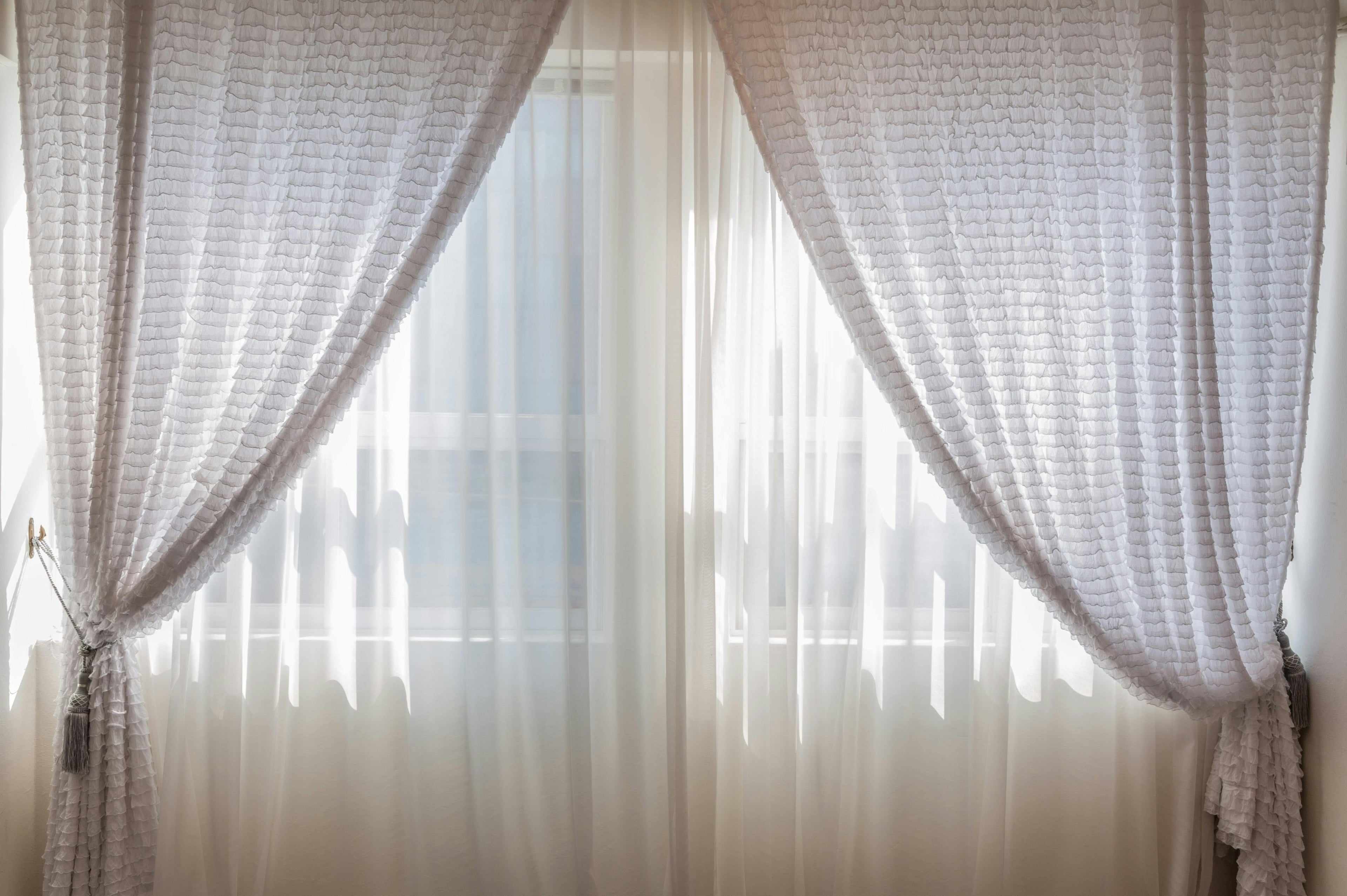
Accessories such as curtain tiebacks or clips can add a personal touch while being functional. Think about decorative elements that can be attached to the curtains themselves, like brooches or pom-poms, for maximum personalization.

How to Install Living Room Curtains?
The living room is often the centerpiece of the house and the choice of curtains should be made carefully.
Choosing Based on the Living Room Style
Select curtains whose fabric, color, and style complement the overall ambiance of your living room. Heavy velvet curtains can enrich a classic living room, while light and airy fabrics are better suited for a modern and minimalist space.
Specific Tips for Large Spaces
In large living rooms, curtains can serve to delineate spaces without partitioning. For large windows or bay windows, opt for curtains with a ceiling track system for smooth movement and easy handling.

Hanging the Curtains
Once you've chosen your curtains and mounting style, the next step is hanging them. Here's how to ensure an installation that combines functionality and aesthetics.
Hanging the Curtains on the Rod
Slide the rings or grommets of your curtains onto the rod, ensuring the fabric is distributed evenly on each side. If using a track, attach the hooks or gliders according to the chosen curtain type. Make sure all curtains are oriented in the same direction for a cohesive look.
Adjusting the Length if Necessary
The length of the curtains may require adjustment for a perfect result. If your curtains are too long, consider hemming them so they fall just to the floor or window sill. For a dramatic effect, slightly longer curtains that "break" on the floor are a trendy option.
Setup Tips for a Professional Result
For a look worthy of an interior decorator, use rod finials to hold the curtains in place and create beautiful folds. Iron or steam your curtains before hanging them to remove packaging creases. Finally, adjust the panels to be symmetrical and balance the amount of fabric on each side.

Common Mistakes to Avoid
Even with the best intentions, some mistakes can compromise the appearance and functionality of your curtains.
Incorrect Measurement Taking
A frequent mistake is incorrectly measuring the width and length of the curtains relative to the window. Make sure to measure from the point where you plan to install the rod to the floor, and add space for the brackets.
Inappropriate Choice of Mounting System
Opting for a mounting system that does not support the weight or type of curtain can lead to failures. Choose brackets and rods suitable for the weight and style of the curtains.
Neglecting the Alignment and Level of the Rods
A misaligned rod can make all the difference between a professional appearance and an amateur result. Use a level to ensure your brackets are correctly installed.

Conclusion
Recap of Key Steps
We have covered the essentials to choose, measure, mount, and hang your curtains, emphasizing the importance of precision in measurement, the choice of mounting, and hanging techniques for an aesthetic result.
Curtains are more than a simple necessity; they are an expression of your personal style. Do not hesitate to experiment with different fabrics, colors, and mounting methods to find what works best for your space. With these tips and tricks, you are now ready to transform any room with the perfect finishing touch: well-hung curtains. To complement this article, we have found a very interesting video on the subject for you:
Share
