














How to hang curtains on a balcony: a complete guide
Turning your balcony into a fully-fledged living space often begins with a quest for privacy and comfort. Installing curtains offers an elegant solution, shielding you from the sun and prying neighbours while creating a soft, cocooning atmosphere outdoors. Yet how do you balance beauty with resilience against the elements? This guide walks you through the essential technical and decorative choices, from fixings suited to your structure to the fabrics that will dress your exterior. You are ready to transform your balcony into a true haven.
Transforming your balcony into a true outdoor sanctuary is a dream for many city dwellers and homeowners. Among the key elements to achieve this, installing curtains holds a special place. Hanging curtains on a balcony is not just a simple decor question; it's a strategy to gain privacy, protect yourself from the sun or wind, and create a unique ambiance between indoors and outdoors. However, this operation raises many practical questions: which mounting system to choose to withstand the elements, which fabrics to prioritize, how to respect regulations? This article guides you step by step, from initial considerations to the final touch, to successfully hang your balcony curtains and transform your space.
Why Install Curtains on Your Balcony? The Multiple Advantages
Before diving into the choice of mounts and fabrics, it is essential to understand all the benefits that curtains provide on a balcony. Far from being a simple aesthetic accessory, they meet concrete needs and significantly improve the comfort of using your outdoor space.
Firstly, curtains offer valuable privacy, especially in buildings with many overlooking neighbors. They create a soft visual barrier, allowing you to enjoy your balcony without being observed. Secondly, they constitute an effective sunshade. By filtering the rays, they moderate the heat and make the balcony livable even in the height of summer, while protecting your plants and garden furniture.
Finally, some wind-resistant models can also reduce drafts, creating a more pleasant microclimate. From a decorative point of view, curtains add a dimension of softness and texture, allowing you to define zones, bring in color, and visually link the interior to the exterior. They transform a simple rectangle of concrete or wood into an additional living space, cozy and personalized.
Analyzing Your Balcony: The Essential First Step
Every balcony is unique. Its structure, exposure, and constraints will largely dictate the possible hanging solutions. Take the time to observe and measure before any purchase.
The Structure and Support Materials
Identify strong anchor points. Do you have a ceiling (a slab) above the balcony? Walls or railings on which to mount a rod? The materials are crucial: brick, concrete, drywall, metal, or wood will not be drilled in the same way and will not support the same loads. A balcony with a glass or thin metal structure will require adapted solutions to avoid damaging it.
Exposure to the Elements
Is your balcony facing the sea, exposed to strong winds? Is it in full south, receiving intense sunlight all day? These factors will determine the choice of fabrics (UV resistance, wind resistance, moisture resistance) and the robustness of the mounting system. A very exposed balcony will require stronger anchors and curtains that can be easily taken in during bad weather.
Choosing the Right Mounting System for Your Balcony Curtains
This is the technical heart of the project. The system must be aesthetic, sturdy, and adapted to your configuration. Several options are available, each with its advantages.
The Classic Rod or Bar
Ideal if you have two solid support points (two walls or a wall and a post). Opt for an outdoor rod in stainless steel, anodized aluminum, or treated wood for outdoors. It is fixed with sturdy wall brackets. For a balcony without side walls, a tension rod can sometimes work if it is of very good quality and perfectly sized, but it is less recommended for a permanent outdoor installation.
The Tension Cable or Steel Wire
A very popular solution for its sleek and contemporary look. A stainless steel cable is tensioned between two fixed points using turnbuckles. The curtains are then hung via hooks or sliding rings. This system is discreet, supports loads well, and withstands the elements if it is marine-grade. It is perfect for long lengths.
The Ceiling Rail or Track
The most elegant and often most practical solution if your balcony has a ceiling (a slab overhang). A discreet rail is fixed to the ceiling, allowing the curtains to slide perfectly without taking up space on the sides. This is ideal for easily opening and closing large panels. Make sure to use anchors suitable for concrete and a rail designed for outdoors.
Railing Mounts
Specially designed to fit the balcony railing, these mounts (U-shaped, clamp, or collar style) allow you to fix a rod or cable directly onto the railing, without drilling in most cases. This is a quick, non-invasive, and reversible solution, perfect for renters. Check compatibility with the thickness and shape of your railing.
Selecting the Perfect Fabrics for Outdoors
The choice of fabric is as important as the choice of mount. A classic indoor fabric will degrade quickly in the sun, rain, and wind.
Prioritize technical fabrics designed for outdoors. They are treated to resist UV rays (their colors won't fade), water (waterproof or water-repellent), mold, and are often heavier to better withstand the wind. Materials like solution-dyed acrylic (Sunbrella is an iconic brand), coated polyester, PVC mesh, or vinyl canvases are excellent choices. Linen and thick cotton can work for very sheltered balconies, but their lifespan will be shorter.
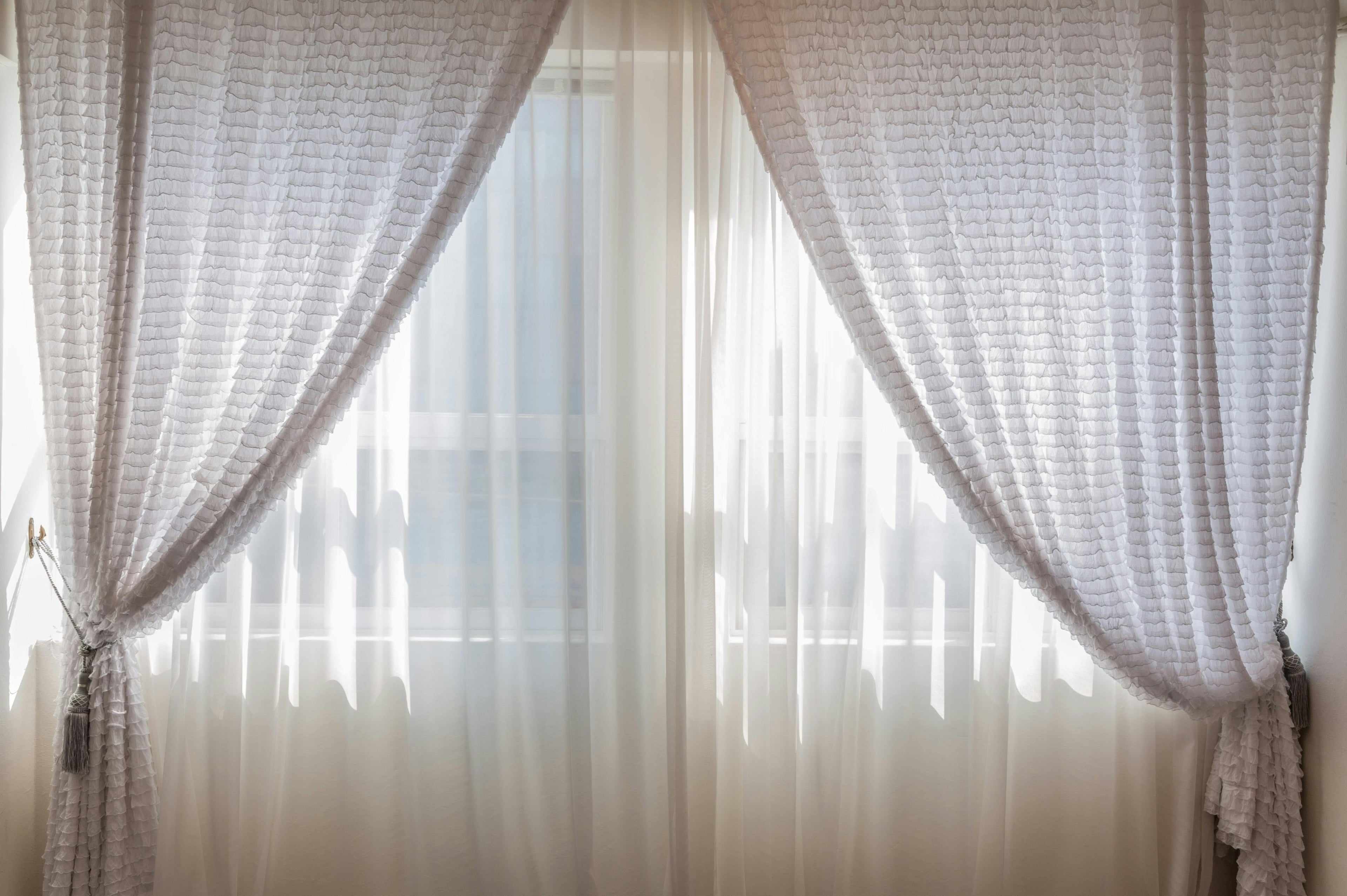
Also consider weight and transparency. Lightweight outdoor polyester sheer curtains offer privacy while letting light through and dancing gracefully with the wind. Thicker, opaque panels will provide more shade and visual isolation. The trend is towards breathable fabrics and natural textures, even in synthetic materials, for a warmer look.
Hanging and Installation Techniques Step by Step
Now that you have chosen your system and your curtains, let's move on to practical installation. Good preparation is the key to a lasting result.
Necessary Equipment
Gather: your mounting system (rail, rod, cable with its turnbuckles), a tape measure, a spirit level, a pencil, a drill/driver, anchors and screws suitable for your support (expansion anchors for concrete, metal anchors for brick, self-tapping screws for metal or wood), possibly waterproofing seals for outdoor mounts.
Key Installation Steps
Start by precisely marking the location of your mounts using the level. Then drill to the recommended diameters for your anchors. For a ceiling rail, space the mounts about every 20 inches to ensure good support. Insert the anchors, screw in the brackets, then assemble the rod or rail. For a cable, securely fix both ends, then tension it gradually using the turnbuckle until you get a firm tension without deforming the anchor points.
Finally, hang your curtains. Depending on the system, you will use sliding rings, hooks, or integrated gliders. Let them hang for a day or two before hemming them definitively so they take their natural drape.
Decor Ideas and Trends for Dressing Your Balcony with Curtains
Curtains are an opportunity to express your style. Current trends favor natural atmospheres and multifunctional solutions.
We thus see the development of balcony divider curtains, which allow creating two distinct zones in a large space: a dining area and a lounge area, for example. Fabrics with geometric patterns or earth tones (ochre, terracotta, sage green) are very trendy. Using multiple layers is also a clever idea: a permanent sheer for privacy, paired with thicker panels that you draw only when you need shade.
For a bohemian style, opt for macramé curtains or light fabric with lace inserts. For an industrial look, steel cable and curtains in gray or black canvas work wonders. Don't forget accessories: tiebacks in natural rope, leather, or brass to hold the curtains to the sides and sculpt the space.
Maintenance and Care: Keeping Your Balcony Curtains Like New
Regular maintenance will significantly extend the life of your outdoor curtains. The frequency depends on your environment (city, seaside, countryside).
For most technical fabrics, regular cleaning with clear water using a gentle jet or a sponge is enough to remove dust and light dirt. For deeper cleaning, check the manufacturer's label. Many outdoor fabrics can be machine washed in cold water, without fabric softener. Let them air dry, without putting them in the dryer.
Periodically inspect the mounting systems. Tighten screws if necessary, check cable tension and the condition of hooks. During winter or announced storms, it is prudent to take down the curtains and store them away to avoid any damage. A little preventive maintenance avoids many problems.
Regulations and Important Precautions to Know
Before drilling or installing anything, certain checks are mandatory. In a condominium building, the regulations may prohibit or regulate any modification to the building's external appearance, including the installation of curtains on balconies. Consult your condominium rules and, in case of doubt, submit a written request to the management.
From a safety point of view, ensure that your curtains do not constitute a fire hazard (they must not block an emergency exit) and that they are not at risk of flying away in strong winds, becoming dangerous projectiles. Always use quality materials and mounts, designed to support the loads and outdoor conditions. Finally, if your balcony overlooks a public street, consider the aesthetic aspect from the outside to preserve the harmony of the facade.
FAQ: The Most Frequent Questions About Hanging Balcony Curtains
Can you install curtains on a balcony without drilling?
Absolutely. Several non-invasive solutions exist. Clamp-on railing mounts are the most common. You can also opt for freestanding wooden or metal structures, like a room divider or arch, over which you will drape the curtains. Finally, tension rod systems can work if the walls or balcony structure offer a sufficiently firm grip, but this solution is less stable outdoors in the long term.
What is the most resistant fabric for a balcony exposed to sun and wind?
Solution-dyed acrylic fabrics are considered the benchmark. They offer exceptional UV resistance (often guaranteed for 5 to 10 years against fading), are water-repellent, breathable, and resistant to mold. Their weight and drape also make them less vulnerable to wind than a light fabric. High-performance polyester with PVC coating is also a very sturdy and often more economical option.
How to prevent curtains from flying away or flapping in the wind?
Several tips: choose a heavy or medium-density fabric. Use tiebacks or ties to secure them firmly to the railings when not in use. During installation, you can add weights to the bottom hem of the curtains (special chains or plastic weighting bars). Finally, on a cable system, ensure maximum tension and use hooks or rings that hold the fabric well.
Should you plan a lining for balcony curtains?
For strictly outdoor use, a lining is generally not necessary, as technical fabrics are already designed to be complete. However, if you are using indoor curtains on a very sheltered balcony and want to improve their opacity or insulation, a removable, moisture-resistant lining can be added. In most cases, prioritize an outdoor fabric of the right thickness from the start.
What budget should you plan for equipping your balcony with curtains?
The budget varies enormously. For a small balcony, a basic system with railing mounts and outdoor polyester fabric can cost between 100 and 200 euros. For a high-end installation with a custom ceiling rail and solution-dyed acrylic curtains from a major brand, expect 500 to 1500 euros, or more for large surfaces. The price-quality ratio is crucial: investing in good mounts and good fabric avoids frequent replacements.
Conclusion: Dare to Use Curtains for a Transformed Balcony
Hanging curtains on your balcony is much more than a DIY project; it's a creative act that redefines the space and how you enjoy it. By following the key steps – analysis, choosing an adapted mounting system, selecting a technical fabric, and careful installation – you get a result that is both aesthetic and functional, which will withstand time and the elements. Whether you're looking for a shady spot, a privacy screen, or simply a touch of poetry, curtains will meet your expectations. Don't hesitate to let your creativity speak in the choice of materials and colors. To discover more inspiration and expert advice for arranging all your living spaces, indoors and outdoors, explore the other guides available on ombreinterieur.fr. For more tips, discover how to whiten curtains on the blog. Browse our online store to see all our collections.
