



















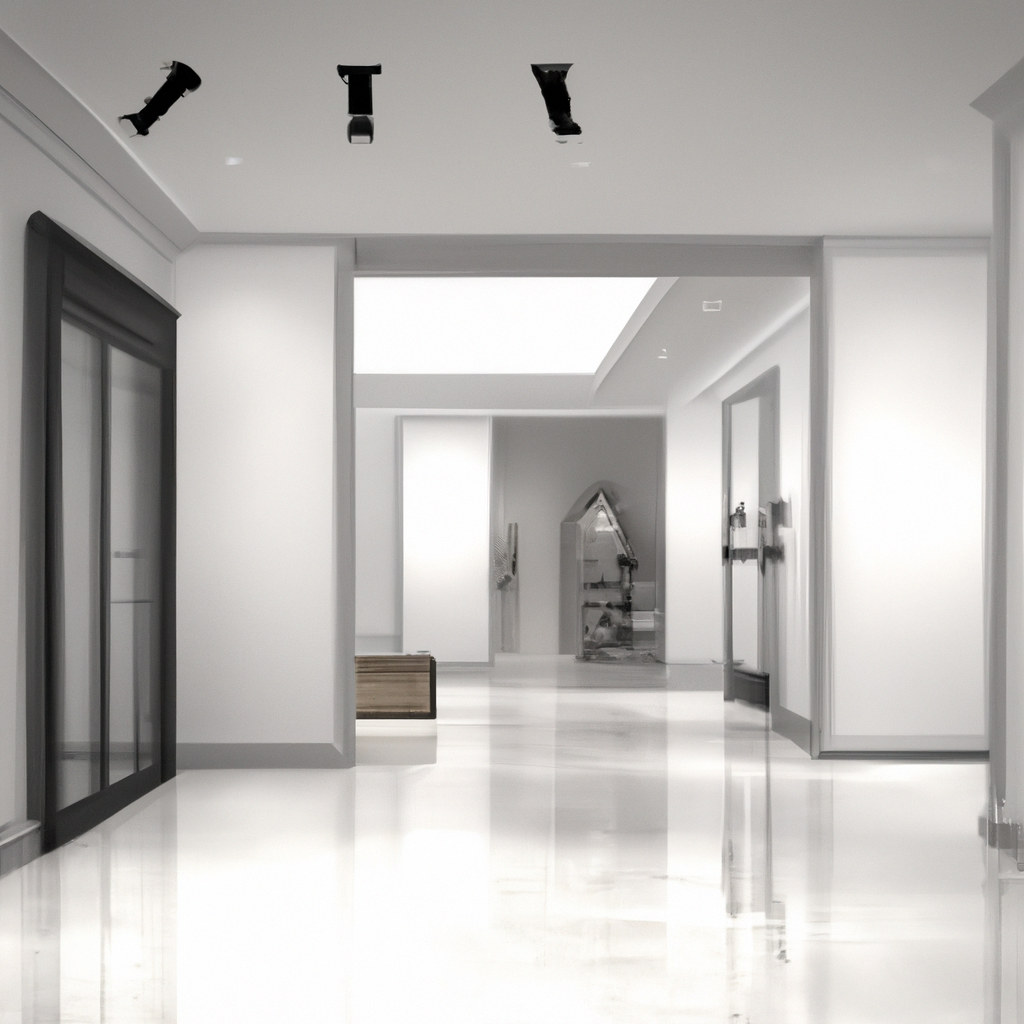
How much paint do I need for a hallway?
Painting a hallway, that often-overlooked transitional space, is a decisive step toward the harmony of your home. Before settling on the perfect shade, a practical question arises: how to estimate the right amount of paint without running short or accumulating half-used cans? The answer lies in a few precise measurements and understanding your material’s coverage rate. This spares you unnecessary trips to the shop and rushed, uneven finishes. Let yourself be guided toward a flawless, serene result, where the colour flows smoothly from wall to wall, transforming a mere corridor into a cohesive, welcoming passage.
Repainting a contemporary hallway is an opportunity to transform a simple passage into a decorative space in its own right. From choosing the color to determining the necessary quantity and preparing the surface, there are many practical questions. This comprehensive guide answers all your questions by detailing the calculations, materials, and colors suitable for a modern and elegant hallway.
Understanding the Specifics of a Hallway
The hallway is a high-traffic area: we pass through it several times a day, carry objects, and it experiences more friction than a bedroom or living room. A contemporary hallway is often characterized by clean lines, minimalist decor, and neat finishes. To ensure a durable result, it's important to choose a resistant, easy-to-clean paint that is suitable for the layout of the passage.
Calculating the Required Amount of Paint
To avoid unpleasant surprises, it's essential to estimate the surface area to be painted, know the paint's coverage, and plan the number of coats appropriate for your project. The general formula is as follows:
Paint Quantity (in liters) = (Surface Area in m² ÷ Coverage in m² per liter) × Number of Coats
Measuring the Surface to be Painted
Start by measuring the length, height, and potentially the width of the hallway. To calculate the wall surface area, multiply the height by the length of each section and add the results. Don't forget to:
- Subtract the area of openings: doors, windows, or alcoves reduce the surface to be covered;
- Include baseboards and frames if you want to repaint them in the same color;
- Consider the ceiling if you are also changing its color: its surface area is generally equivalent to the floor area.
Calculation example: for a hallway 8 m long and 2.5 m high, with two longitudinal walls and two transverse walls, the total wall surface area is: (2 × 8 m × 2.5 m) + (2 × 1.2 m × 2.5 m) = 45 m². If the ceiling measures 8 m × 1.2 m, add 9.6 m². The total surface area to be painted is then approximately 55 m².
Paint Coverage: How Many Square Meters Per Liter?
Coverage indicates the theoretical surface area that can be covered with one liter of paint for one coat. For common acrylic paints, coverage ranges from 8 to 12 m² per liter. Manufacturers generally indicate this information on the packaging. As a precaution:
- Aim for an average of 10 m²/L to calculate the quantity, even if the can states a higher coverage;
- Add a 10% margin to cover losses, touch-ups, and unforeseen circumstances;
- Double the volume for porous surfaces (brick, concrete, raw plaster) which absorb more and require a primer.
Number of Coats and Primer
The number of coats depends on the condition of the surface and the opacity of the chosen paint. For a contemporary hallway, it is advisable to:
- Apply a primer coat if the walls have never been painted or have stains. It evens out the surface and improves adhesion;
- Apply two finish coats to obtain a uniform and resistant color;
- Respect the drying time between each coat (generally 4 to 6 hours for acrylic paint);
- Avoid "one-coat" paints in a high-traffic hallway as they often offer less coverage on corners and heavily used areas.
Factors Influencing Quantity
In addition to surface area and coverage, other parameters can affect the amount of paint needed:
- Nature of the surface: a smooth wall consumes less than an irregular or very absorbent surface;
- Type of tool: long-pile rollers retain more paint than short-pile ones, and a quality brush limits product loss;
- Previous color: covering a dark shade with a light color often requires an additional coat;
- Application technique: careful cross-hatching (vertical then horizontal strokes) optimizes distribution and reduces overloads.
Choosing the Ideal Paint for a Hallway
The choice of paint is not limited to color. The composition, finish, and maintenance must be adapted to this high-traffic area to ensure a durable and aesthetic result.
Finishes: Matte, Velvet, Satin, or Glossy?
The finish corresponds to the surface appearance once the paint is dry. Each effect has its advantages:
- Matte paint: deep, reflection-free finish, perfect for masking imperfections and creating a cozy atmosphere. It is suitable for ceilings and less exposed walls, but it is less resistant to rubbing.
- Velvet paint: a compromise between matte and satin. Its slightly powdery appearance brings warmth and softness. It is more resistant to frequent passages and suitable for hallways or living rooms.
- Satin paint: soft and luminous finish, easy to clean. Ideal for high-traffic areas like entrances and corridors, it reflects light and creates a silky effect.
- Glossy or lacquered paint: very lustrous, it visually enlarges the space and highlights architectural details. However, it accentuates flaws and requires perfect surface preparation. Best reserved for woodwork, doors, or decorative areas.
For a contemporary hallway, velvet or satin paint is often preferred: sufficiently resistant, it is easy to clean and subtly reflects light without glare. Ceilings will remain matte to avoid bothersome reflections.
Types of Paint: Acrylic, Glycero, or Bio-based
Beyond appearance, composition affects odor, drying time, and durability:
- Acrylic paint: water-based, it dries quickly, is almost odorless, and makes tool cleaning easier. Its low volatile organic compound (VOC) content makes it a healthy choice for living areas.
- Glycero paint: solvent-based, it offers a very smooth finish and superior resistance. However, it emits persistent odors and requires a longer drying time; it is more often used in damp or outdoor areas.
- Bio-based paints: made from natural and renewable ingredients, they combine environmental respect with performance. Some ranges based on vegetable resins are perfectly suitable for hallways and offer very good opacity.
For a domestic hallway, high-end acrylic paint or bio-based paint is generally sufficient. Be sure to choose a washable product for easy maintenance.
Color Palette for a Hallway
The color of your hallway influences the perception of space. The 2026 trends offer a range of colors inspired by nature and the 70s, while remaining in line with contemporary design.
Brightening a Narrow or Dark Hallway
In a cramped or poorly lit hallway, prioritize bright shades. Light colors visually enlarge the space and reflect natural or artificial light. You can opt for:
- Nuanced whites: ivory, off-white, or ecru for a chic look;
- Soft pastels: powdery pink, mint blue, celadon green, or pale yellow for a soothing atmosphere;
- Warm neutrals: beige, greige, or pearl gray that blend with all styles.
The decor tip: paint the walls and woodwork in a single light color to eliminate contrasts and visually lengthen the passage.
Adding Character to a Bright Hallway
If your hallway benefits from beautiful natural light or generous space, dare to use bold colors:
- Anthracite, inky blue, or deep black for a graphic and contemporary ambiance;
- Forest green or petroleum blue for an Art Deco style or industrial look;
- Mocha Mousse (warm brown, Pantone color of the year 2026) paired with sage green or old rose for a cozy atmosphere.
To avoid a "box" effect, combine these dark shades with a light ceiling or decorative elements in gold, copper, or light wood.
Two-tone Contrasts and Geometric Patterns
Two-tone paint energizes the hallway and adds authenticity. Here are some ideas:
- Complementary color pairings: lagoon blue with cream, terracotta with powdery pink, ochre yellow with soft gray;
- Dark wainscoting: paint the lower part of the wall in a darker color than the upper part, ideal for shortening a long hallway;
- Color blocks or geometric shapes: arcs around a mirror, rectangles behind a bench, or triangles behind a console. These patterns personalize and structure the space.
Remember to stay consistent with your interior style and limit the palette to a maximum of three shades to avoid overwhelming the eye.
Influence of Floor and Ceiling
The floor and ceiling contribute to the visual balance of the hallway. Here are some rules:
- Floor darker than walls: natural oak parquet, taupe gray tiles, or dark polished concrete anchors the decor and highlights light walls;
- Light ceiling: in most hallways, a white or ecru ceiling adds height and prevents a oppressive feeling. In Haussmannian apartments with very high ceilings, you can opt for a dark shade to create a theatrical ambiance;
- Color repetition: a baseboard or door frame painted in the color of your furniture adds coherence.
Preparing the Hallway Before Painting
Thorough preparation ensures a professional finish. The preparation phase is just as important as the actual painting.
Cleaning and Repairing Surfaces
Start by dusting and washing the walls to remove grease and dirt. Fill holes and cracks with a filler, then lightly sand to obtain a smooth surface. If the walls have moisture stains or very absorbent surfaces, apply a sealer or specific primer.
Protecting Furniture and the Area
Remove frames, light fixtures, and move furniture. Protect floors and remaining furniture with plastic tarps or recycled sheets. Use masking tape to precisely define woodwork, switches, and baseboards. These protections prevent drips and facilitate painting.
Applying Paint: Method and Tips
Always paint from top to bottom:
- Start with the ceiling: this prevents splashes on freshly painted walls. Work in sections and cross-hatch for better uniformity.
- Continue with the walls: paint the corners with a brush, then use a roller suitable for the surface texture. Cross-hatch and spread the paint well to avoid streaks.
- Finish with woodwork and trims: window frames, doors, baseboards, and wainscoting. Choose a fine brush for delicate areas and remove masking tape before the paint is completely dry to prevent peeling.
Remember to ventilate the room during work to promote drying and regularly stir the paint to maintain a consistent shade. Clean your tools immediately after use: a clean roller applies the second coat better.
Additional Tips for a Professional Result
- Choose quality tools: a good roller and a soft-bristle brush ensure uniform distribution and limit splatter.
- Mix cans: if you buy several cans of the same color, mix them in a larger container to avoid shade variations.
- Work in good light: set up powerful lighting to immediately spot missed spots and touch-ups.
- Keep leftovers: store remaining paint in an airtight container. It will be useful for any touch-ups.
- Respect environmental standards: recycle your empty cans and choose paints with low VOC (volatile organic compound) emissions to preserve indoor air quality.
Share

