













How to Personalize Candles: Techniques and Tips
The candle, an object both ancient and resolutely contemporary, has traversed the centuries to establish itself as an essential element of our interior decoration. Much more than a simple source of light or fragrance, it is a vector of atmosphere, emotion, and personality. But faced with the overwhelming and sometimes impersonal offerings of the market, how can you infuse a touch of uniqueness into these dancing flames? Personalizing candles has become a major trend, an art of living that allows you to create unique pieces, in harmony with your interior and your memories. This article is your complete guide to transforming a standard candle into a personalized treasure, from the most accessible decoration techniques to the most sophisticated creations.
Why personalize your candles? The essence of a unique interior
In a world of mass production, the quest for authenticity and singularity has never been stronger. Personalizing a candle is much more than a simple creative hobby. It is an act of creation that allows you to assert your style, create a custom-made atmosphere, and even offer a gift full of meaning and emotion. A customized candle tells a story, yours, that of your home, or of the person you give it to.
From a decorative standpoint, it becomes an accessory in its own right, a focal point that dialogues with your furniture, your textiles, and your color palette. It can be the element that completes a festive table, brings a touch of color to a neutral room, or enhances a fireplace. Personalization also responds to a desire to consume more responsibly, by recycling old candles or choosing natural materials for your creations.
The essential basics: choosing the candle to personalize
Not all candles lend themselves equally to the exercise of personalization. The choice of the base is a crucial step that will determine the ease of implementation and the final result.
The different types of candles as a base
There are mainly three main families. Paraffin wax candles, the most common and economical, offer a smooth surface ideal for painting or image transfer. Soy wax candles, natural and renewable, have a creamier texture and a cleaner burn. Finally, beeswax candles bring a natural color and soft fragrance, but their surface can be more irregular.
Shape, size, and color: the artist's canvas
The shape of the candle is your first creative decision. A cylindrical or pillar candle will be perfect for coating or engraving techniques. A flat, wide candle (tea light type) lends itself wonderfully to cutouts or collages. As for the color of the wax, a neutral shade (white, ivory, beige) will be a perfect blank canvas, while a colored wax can serve as a base for a theme (blue for the sea, green for nature...).
Technique #1: Decoration with paint and gilding
Applying color directly to the wax is one of the most direct and rewarding methods for personalizing a candle. It is imperative to use paints specifically designed for wax or acrylic paints mixed with a suitable medium, otherwise the paint may crack or fail to adhere.
For an elegant and trendy effect, gilding with gold or silver leaf is essential. Apply a thin layer of special glue (size) to the desired areas, let it become translucent, then carefully place the leaves. The metallic effect brings a touch of luxury and modernity, especially on black or dark-colored candles. Metallic paints or alcohol inks also offer simpler alternatives with a similar result.
Technique #2: Coating and embedding elements
This technique involves creating a second skin for your candle by incorporating decorative elements. The simplest coating is rolling in glitter or colored sand, after slightly melting the outer surface using a heat gun. For a more natural and bohemian result, embedding dried flowers, aromatic herbs, or small shells is sublime.
The method is meticulous: arrange your elements on a flat surface, gently roll a slightly softened candle (warmed) so they become embedded, then possibly fix them with a thin layer of melted translucent wax. This technique is perfect for creating themed candles (romantic with roses, marine with seaweed...).
Technique #3: Engraving and sculpting on wax
For those with skillful hands, engraving allows you to create negative patterns on the candle. Using specific heated tools (pyrography pen) or simply a sharp, preheated knife, you can draw patterns, write messages, or create geometric textures. This method requires practice but offers a result of great finesse and beautiful durability.
A more accessible alternative is the use of heated wax stamps. These metal stamps, once heated, allow you to imprint a raised pattern onto the candle's surface in seconds, for a professional and reproducible effect.
Technique #4: Image transfer and decoupage
Creating a photo transfer onto a candle is a magical way to create a unique memory, for a wedding, birthday, or birth. The most common technique uses tissue paper and an iron. Print your pattern in mirror on tissue paper, cut it out, place it on the candle, and gently apply the heat of the iron through parchment paper. The pattern then transfers into the wax.
For a more graphic effect, decoupage (or décopatch) with patterned paper napkins is a foolproof technique. Simply cut out the patterns, apply them to the candle using a special varnish-glue, and layer them for an artistic and unique result.
Technique #5: Personalizing containers and holders
Personalization doesn't stop at the wax itself. The container, if there is one, offers a vast field of possibilities. A simple glass jar can be transformed with stained glass paint, the application of ribbons, twine, or jute, or even the tape art technique (masking tape) to create geometric patterns.
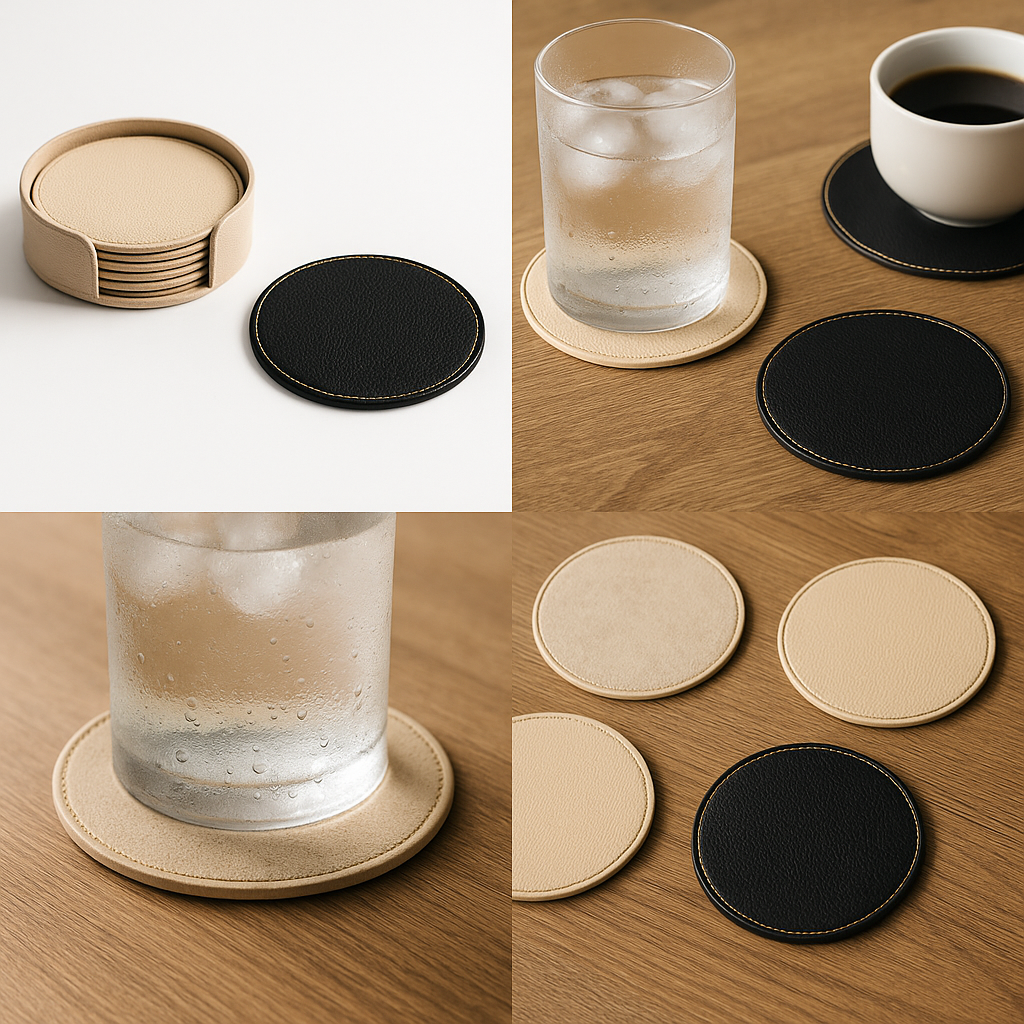
For candles without containers (pillars), think about the holder. Create a personalized coaster from painted wood, decorated ceramic, or resin with inclusions. You can also hang candles in lanterns that you have customized, creating a true light installation.
Creating your custom fragrance: the ultimate olfactory personalization
Sensory personalization is the icing on the cake. Creating your own fragrance allows you to associate a visual atmosphere with a unique olfactory identity. For homemade candles, you can incorporate pure essential oils into the melted wax. Play with combinations: lavender and cedarwood for calm, lemon and rosemary for vitality, orange and cinnamon for conviviality.
For commercial candles, it is more difficult to deeply modify the fragrance, but you can enhance the existing one. Place the lit candle near a bowl containing dried citrus peels, cinnamon sticks, or fresh herbs. The heat will diffuse these natural aromas, creating a complex and personalized bouquet.
Current trends in personalized candles
The world of candle personalization closely follows decor trends. Currently, several styles stand out. The organic and raw style is very popular, with candles in irregular shapes, incorporating dried flowers, moss, or presented in raw terracotta pots.
The minimalist and geometric aesthetic remains a timeless classic, with personalizations based on clean lines, dots, colored bands, or simple abstract patterns, often in neutral tones or a single vibrant color. Finally, narrative personalization is on the rise: it involves creating a candle that tells a specific story, using photo transfers, engraving of quotes, or embedding symbolic objects (a shell from a specific beach, a nugget of ore...).
Essential safety precautions
Creativity should never compromise safety. When you personalize a candle, always keep these golden rules in mind. Never use flammable elements or those that could easily catch fire (thick paper, untreated feathers, certain types of ribbon) in the immediate vicinity of the wick. Decorative elements should be placed on the lower part of the candle or securely embedded/encased.
Ensure that the paints, glues, or varnishes used are non-toxic and heat-resistant. Finally, when lighting a personalized candle, never leave it unattended and place it on a stable, non-flammable surface, away from drafts and flammable materials.
FAQ: Your questions about candle personalization
What is the easiest technique for a beginner?
The most accessible technique to start with is undoubtedly decoration by simple coating (glitter, colored sand) or decoupage with paper napkins. They require no special tools, are inexpensive, and allow you to achieve a very satisfying result quickly, without the risk of ruining your candle.
Can you personalize an already scented candle?
Absolutely. Most surface decoration techniques (painting, coating, engraving, transfer) do not affect the candle's fragrance, which is encapsulated in the wax. Simply be careful not to overheat the candle during personalization, so as not to alter the olfactory notes.
How can I make the decorations last over time?
Durability depends on the technique and the fixative used. For glued elements or paints, always use products designed for wax or specifically labeled as heat-resistant. A thin layer of clear candle varnish or melted soy wax applied as an overlay can seal and protect delicate decorations.
Can my personalized candles be given as gifts?
They make an exceptional gift! A personalized candle demonstrates an investment of time and thought far superior to a standard purchase. Combine an engraving with initials, a transfer of a souvenir photo, and a fragrance chosen for the person, and you will offer an unforgettable and emotional present.
Where can I find inspiration for my creations?
Inspiration is everywhere! Observe decor trends on Pinterest and Instagram, draw inspiration from nature's color palettes, abstract art, or even the cover of your favorite book. Your own interior is an inexhaustible source: harmonize the colors of your candles with those of your cushions, your rug, or a painting.
Conclusion: Ignite the spark of your creativity
Personalizing candles is much more than a manual activity; it is an invitation to bring intention and beauty into everyday life. Whether you opt for a simple touch of color or a complex sculptural creation, each transformed candle bears your signature. It becomes a reflection of your tastes, an ambassador of atmosphere for your home, and a unique testimony to your artistic sensibility. Don't be afraid to experiment, mix techniques, and let your intuition speak. Wax is a generous and infinitely transformable material. To continue your journey into an interior that reflects you, explore without delay the many other inspirations and practical guides available on Ombre Intérieur, your resource for personal and inspired interior decoration. Fall for Watercolor BSL Alphabet Wall Print, British Sign Language Learning, a real plus for your interior. Our guide how to whiten curtains helps you make the right choice. Find our entire decor universe on Ombre Interieur.
